Why Capable Women Feel Constantly Tired

You are not lazy. You are not weak. You are running a one-person operation with no deputy and no days off.
At the end of the workday, most people hand something off. A problem, a task, a decision. For women carrying life largely alone, there is no handover. The shift ends and the next one begins — quietly, without ceremony, without anyone noticing. Dinner. Bills. The appointment that needs booking. The email from the landlord. The mental list that never fully clears. This is not tiredness from doing too much. This is tiredness from never being able to stop.
Understanding why capable women feel tired starts here — with recognising the structure, not blaming the person.
The load is structural, not personal: why capable women feel tired
The exhaustion most capable women carry is not a character flaw. It is a structural problem. There is no co-pilot sharing the weight of decisions, no one absorbing half the mental load, no backup system when life gets complicated. Every thread — financial, practical, emotional, logistical — runs through one person. You.
The clearest way to see this is in the physical moments — the ones that were simply designed for two people.
Moving home alone means doing both ends simultaneously. You pack everything, follow the removalist, and station yourself at the new place to direct where every piece of furniture goes — while the old place still needs clearing. If there were two people, one stays back, one moves forward. The work divides naturally. Alone, you do it sequentially, running between both ends, absorbing the full cognitive and physical load of a task the process was never designed for one person to manage.
Assembling a bed frame alone means running from left to right, top to bottom, holding one side in place while you reach for the other — the way the IKEA manual quietly assumes a second pair of hands. Two people make it a ten-minute job. One person makes it a physical negotiation with gravity.
This is not a failure of capability. It is a mismatch between the design of everyday life and the reality of living it alone.
The single person tax
The structural problem extends beyond the physical. The financial architecture of modern life was largely built around shared costs. Rent divided by two. Utilities split. Groceries bought in quantities that make economic sense when two people eat them. The baseline cost of a stable life was calculated, implicitly, with a partner in the model.
Solo living does not halve those costs. The rent is the same. The utility bills are the same. The grocery runs, the insurance, the moving truck — all priced for a life that assumed someone else was contributing. Women living alone carry this quietly, and it compounds. It is not a personal spending problem. It is a structural tax on a life the system did not design for.
On the question of partnership
The obvious response is: get a partner. Share the load.
It is worth examining that honestly.
A compatible, genuinely load-sharing partner is real relief. Nobody is arguing otherwise. But compatibility is not guaranteed, and the wrong partnership does not halve the load — it adds to it. A partner who does not pull their weight redistributes the invisible work onto you while creating the social appearance of shared living. A financially dependent partner does not reduce the single person tax — it increases it. And a partner who is emotionally or financially abusive does not reduce the burden of carrying life alone. It layers a new and more damaging burden on top of it.
The choice is not simply solo load versus shared load. It is known solo load versus unknown partner risk. That is a real trade-off, and it deserves to be named as one rather than dismissed.
Use money as a second pair of hands

Some tasks were designed for two people. Moving furniture, assembling a bed frame, carrying heavy groceries — these are not failures of capability. They are a mismatch between the design of everyday life and the reality of living it alone.
The intelligent response is not to absorb that cost through sheer effort. It is to spend a known, defined amount of money to protect the asset — your body and your energy — for work that gives a better return.
This is not an indulgence. It is operational logic. You are running a one-person operation in a world built for two, and there is no shame in that. What matters is that you stay functional — not just this week, but across the next ten, twenty, thirty years. Your health is the engine that funds everything else: the rent, the stability, the life you are building. A pulled muscle moving a wardrobe, or a body ground down by tasks it was not built to carry alone, costs far more than the service you chose not to pay for.
Spend the known amount. Protect the asset. Focus your energy where it gives the most back.
A small system: the daily handover
You cannot always change how much you carry. But you can create a point each day where you formally put it down — not forever, just for now. A deliberate transition that tells your nervous system the shift has ended, even when there is nobody to hand off to.
This is the daily handover. It takes five minutes. It works because it is structural, not motivational — you do not need to feel like doing it. You do it because it is the rule.
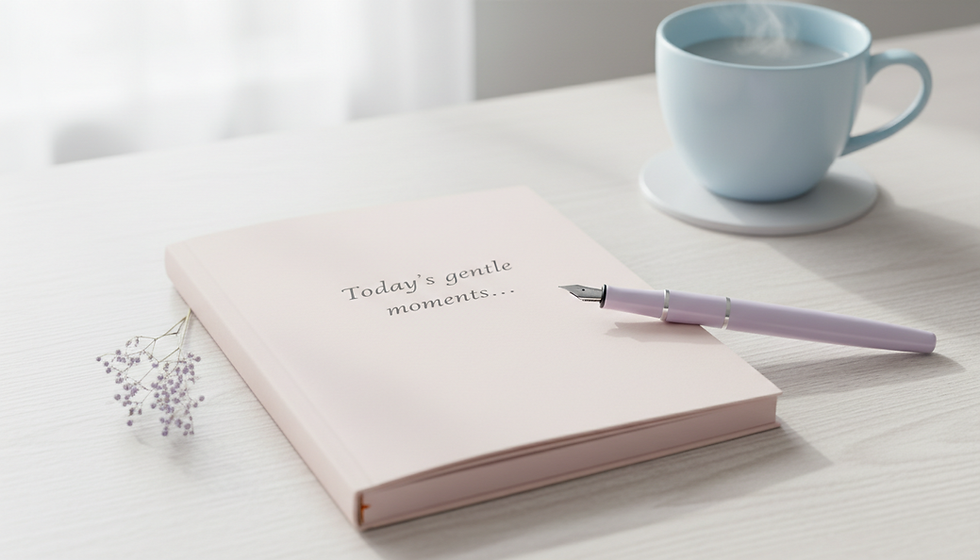
At the same time each evening — before dinner, after you close the laptop, whatever marker makes sense — sit down and do three things.
Write down the three things still unresolved and sitting in your head. Not to solve them. Just to move them from your mind onto paper. The brain treats unfinished tasks as open loops that require monitoring. Writing them down closes the loop temporarily and reduces the background noise.
Name one thing that is done. Not the most impressive thing. Just one thing that moved forward today. The exhausted mind defaults to scanning for what is still undone. This rebalances that scan.
Set one hard stop. One thing you will not think about until tomorrow. Name it specifically — not a vague permission to rest, but a specific boundary. “I will not think about the lease renewal until tomorrow morning.” Vague rest does not work. Specific rest does.
Five minutes. Three steps. No app required.
It will not remove the load. It will create one point each day where you are not actively carrying it — and over time, that single daily break changes what the tiredness feels like, because your nervous system learns the off-switch exists, even briefly.
The point is not to do less
This is not an article telling you to slow down or want less. The load is real. The responsibilities are real. The single person tax is real.
The point is to name the structure accurately, make deliberate decisions inside it, and stop spending energy on the wrong explanation. You are not tired because you are weak or disorganised or doing life wrong. You are tired because you are running a one-person operation that was designed for two — financially, physically, and logistically.
Name it clearly. Outsource strategically. Protect the asset.
Structure is self-protection. Even in five-minute increments.
The content shared here is based on personal experience and honest synthesis only. It is not medical, psychological, or professional advice. For decisions that matter, please consult a qualified professional.


Comments